
buying a villa in phuket as a foreigner
Foreigners can own a Phuket villa's house but not its land. How the lease, Thai company and spouse routes work, what they cost, and what to check before you pay.
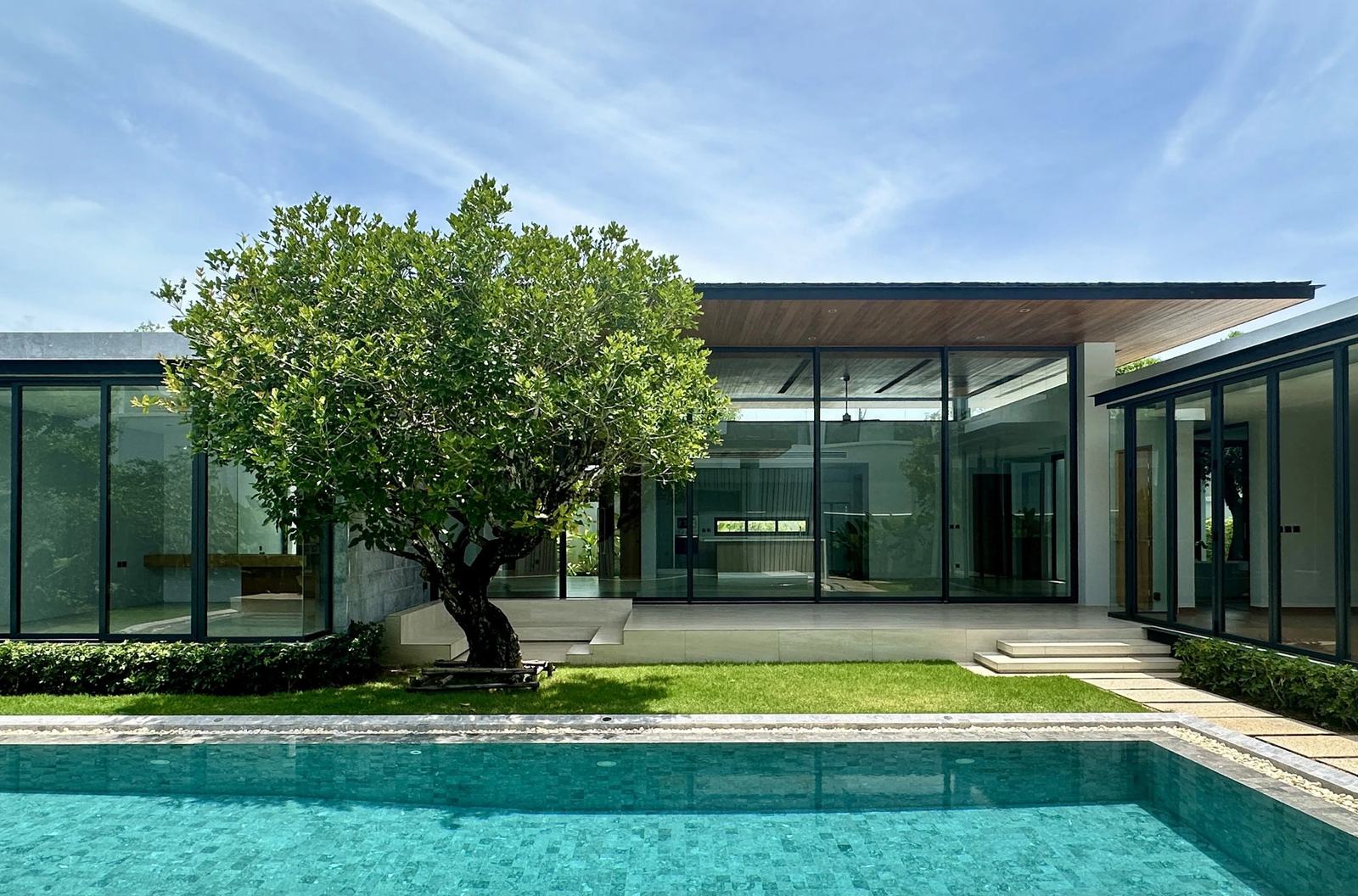
A condo is the one kind of Phuket property a foreigner can own outright, land share and all (see how foreigners buy a condo). A villa is different, because it sits on its own land, and foreigners can't own land in Thailand in their own name. That doesn't stop overseas buyers owning villas: it just means choosing a structure. Here's how each one works.
the house and the land are separate
Thai law treats a building and the land under it as two different things. A foreigner can own the house itself in their own name. The question is how you hold the land, and there are three common answers.
1. a registered land lease
The most common route for foreign villa buyers. You own the house, and the land is leased to you for up to 30 years, registered at the Land Office against the title deed. Many contracts add options to renew for further 30-year terms. Those renewal promises are a contract with the landowner rather than a registered right, so they're only as good as the paperwork and the party behind them: have a lawyer check how they're written and what happens if the land is sold.
Leases over three years must be registered to be enforceable. Registration costs are a fee of 1% of the total rent for the term plus 0.1% stamp duty. Some buyers also register a superficies (the right to own buildings on someone else's land) or a usufruct alongside the lease for extra protection.
2. a thai company
The land is bought by a Thai limited company in which you hold a minority. This only works if the Thai shareholders are genuine investors. Using nominee shareholders who are only there on paper is illegal under the Foreign Business Act, and the authorities do check. A company also has running costs: an accountant, annual audited accounts and tax filings, every year you own it. When a seller or developer offers a "freehold villa for foreigners", this is usually what's behind it, so ask exactly what the structure is.
3. a thai spouse
If you're married to a Thai national, the land can be registered in your spouse's name. At the Land Office the foreign spouse signs a declaration that the money is the Thai spouse's own, which means the land is legally theirs. Think it through, and get advice on what happens in a divorce or on death.
There's also a rarely used route that lets a foreigner buy up to one rai of land for a home with a large investment in Thailand (at least ฿40 million, held for five years) and ministerial approval. For most buyers it isn't practical.
what to check before you pay
- The title deed: a Chanote (Nor Sor 4 Jor) is the strongest; anything weaker needs extra care
- Who owns the land now, and whether it's mortgaged to a bank
- A building permit for the house, and that what's built matches it
- Legal road access and the right to connect water and electricity
- On an estate: who looks after the roads, security and common areas, and what it costs
- Off-plan: the developer's record, the payment schedule and what happens if the build runs late
costs
On a leasehold villa, expect the lease registration fee and stamp duty above, plus the transfer costs on the house. Where land changes hands, as with a company purchase, the Land Office charges a 2% transfer fee on the appraised value, plus specific business tax or stamp duty and withholding tax depending on the seller. Who pays what is agreed in the contract. See the costs of buying in Phuket for how these taxes work.
how we help
We sell villas in Layan, Thalang, Cherngtalay and Mai Khao, and we'll tell you plainly how each one is held. We always recommend an independent Thai lawyer to check the title, the lease or company and the contract, and we can introduce you to ones we know. Once it's yours, we can manage and let it.
questions.
Can a foreigner own a villa freehold in Phuket?
Not the land, in their own name. A foreigner can own the house outright, with the land on a registered lease, through a genuine Thai company, or in a Thai spouse's name.
How long is a land lease in Thailand?
Up to 30 years per registered term. Contracts often include options to renew, but renewals depend on the contract and the landowner, so have a lawyer check them.
Is a condo or a villa better for a foreign buyer?
A condo is simpler: freehold in your own name, inside the foreign quota. A villa gives you more space and privacy, with a lease or company structure for the land. Many buyers choose based on how they'll use it.
General information for overseas buyers, not legal, tax or immigration advice. Rules change: confirm the details for your purchase with a Thai lawyer.
areas in this guide.
homes to look at.
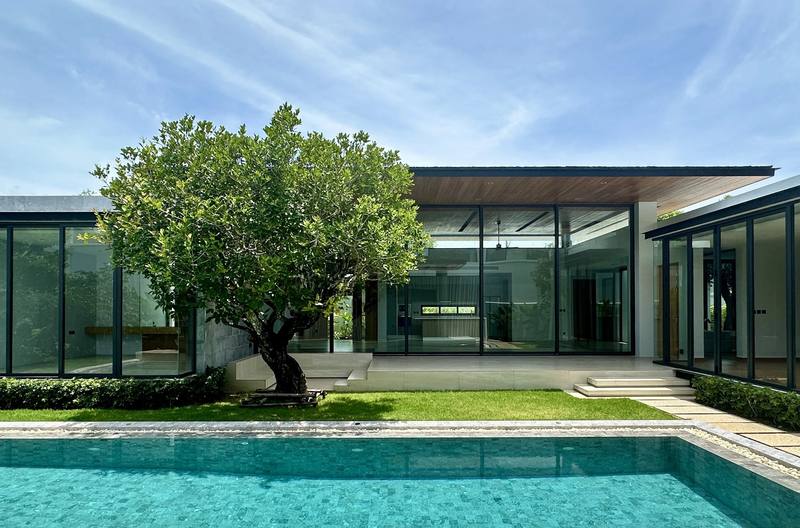
Single-storey 4-bed pool villa on a 794 m² plot, Botanica Foresta
A big, light, single-level pool villa in a finished Botanica estate, now ฿9.7M below its original asking price.
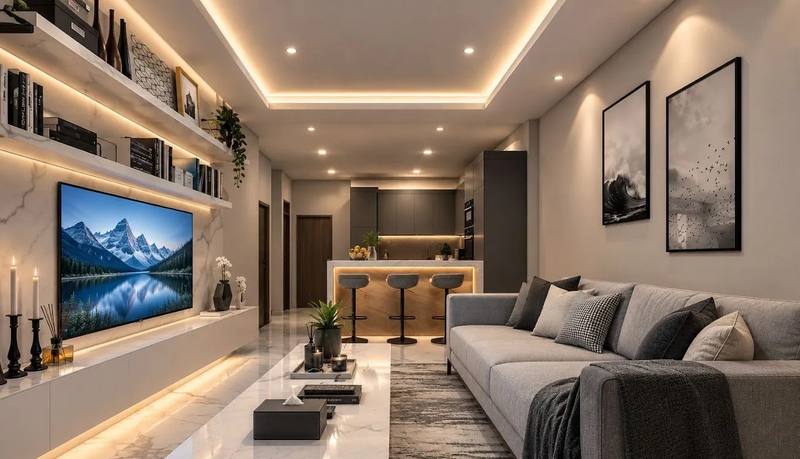
New 4-bed pool villa you can split into two homes, Thalang
A brand-new two-storey pool villa on a quiet lane of eight homes, with two front doors so each floor can be its own home.
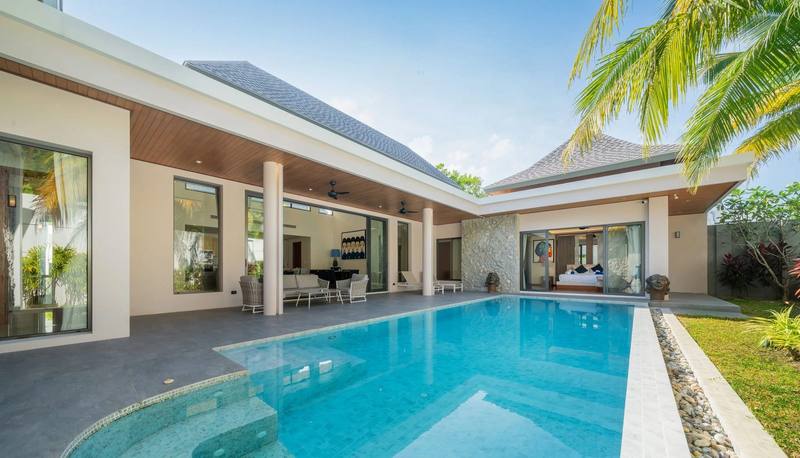
4-bed pool villa for sale at The Breeze Villas, Cherngtalay
A finished single-storey pool villa on a secure estate of 19, between Bang Tao and Surin.